
Tabanani Village Tour
"The Village of
Four Fruits
Tabanani is a Mandinka village near the Senegalese border, reached by road through rural countryside. The village welcomes visitors through Community-Based Tourism experiences shaped by local traditions, music, and everyday life.


Arrival and Welcome
Visitors are greeted with Mandinka greetings, music, and dance, setting the tone for a lively and participatory visit rooted in cultural exchange rather than performance.
Village Life and Guided Walk
A guided walk through Tabanani introduces village life, family compounds, and shared spaces. Along the way, visitors meet local artisans and learn how skills and traditions are passed down through generations.


Ifangbodi
The Flying Kankurang
Tabanani is home to the Faraa Kankurang, also known locally as the Ifangbodi or Flying Kankurang. Visitors learn about its role, symbolism, and dress made from jaffo (tree bark), as well as the meaning of the Kankurang name, rooted in Mandinka ideas of voice, authority, and protection.
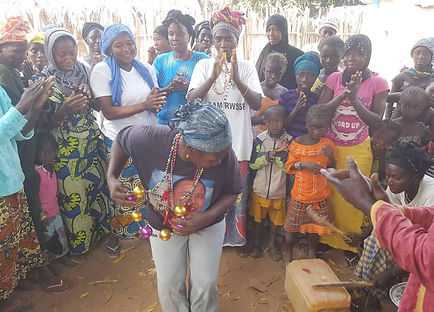
The Kanyaleng Women
The visit includes time with the Kanyaleng women, a respected social group with important cultural roles. Through song, humour, and ritual, they are associated with fertility blessings, healing, and peace-building within the community. Visitors may be invited to dance with them as part of a shared moment of joy and connection.
Preparing Domoda
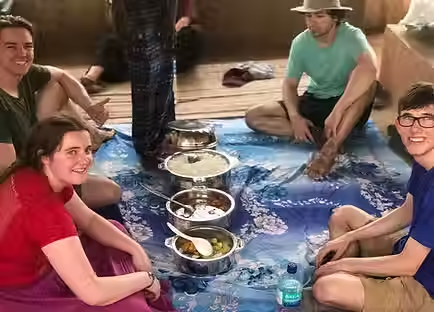
Visitors take part in preparing Domoda, a traditional Mandinka groundnut-based dish. The experience begins with harvesting groundnuts, followed by shelling, roasting, skinning, and grinding them into paste before cooking with vegetables, spices, and rice.
All cooks involved have received food hygiene training, ensuring safe and respectful participation.
Making the Taafia Fan
Visitors take part in preparing Domada, a traditional Mandinka groundnut-based dish. The experience begins with harvesting groundnuts, followed by shelling, roasting, skinning, and grinding them into paste before cooking with vegetables, spices, and rice.
All cooks involved have received food hygiene training, ensuring safe and respectful participation.

Journey and Setting
Reaching Tabanani involves a 45-minute drive through rural landscapes, making the journey itself part of the experience and offering insight into life beyond the river towns
Closing the Visit
The visit ends with music, movement, and conversation — a relaxed conclusion shaped by shared activity rather than formal farewell
and perhaps you found out why it is called Tabanani...
If not look here
Reflection
Visitors leave Tabanani with shared memories, a deeper understanding of Mandinka traditions, and the experience of learning directly from the people who live them.