
Discover Janjanbureh
A place where every visitor finds
a story of their own.
Tucked along the River Gambia is an island town shaped by heritage, craft, river life, and the quiet confidence of a community that knows who it is. Janjanbureh opens gently — a place where mornings begin on the water, histories are walked rather than read, and traditions are kept alive through everyday hands and voices.
Some come seeking culture, others nature, adventure, reflection, learning, or connection. However you arrive, Janjanbureh has a way of meeting you where you are — and inviting you a little deeper.
Every path leads somewhere different: a guided story, a village welcome, a river journey, or the echo of drums carrying living heritage forward.
This is your invitation to begin the journey — to discover what unfolds when you step onto the island and let it reveal itself.
Discover Janjanbureh
A place where every visitor finds a story of their own.
Tucked along the River Gambia is an island town shaped by heritage, craft, river life, and the quiet confidence of a community that knows who it is. Janjanbureh opens gently — a place where mornings begin on the water, histories are walked rather than read, and traditions are kept alive through everyday hands and voices.
Some come seeking culture, others nature, adventure, reflection, learning, or connection. However you arrive, Janjanbureh has a way of meeting you where you are — and inviting you a little deeper.
Every path leads somewhere different: a guided story, a village welcome, a river journey, or the echo of drums carrying living heritage forward.
This is your invitation to begin the journey — to discover what unfolds when you step onto the island and let it reveal itself.
Janjanbureh, the island town
that grew in the heart of the country.
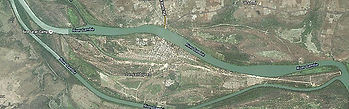
The town on McCarthy Island, formerly know as Georgetown

Its relationship to the popular coastal region

The smallest mainland country in Africa, surrounded by Senegal

Its relationship to Europe-
on the same line of longitude as UK

A Place Shaped by
the River and History

Janjanbureh did not begin as a town, but as a sandbank slowly formed by the River Gambia over centuries. Known earlier as Lemain Island, it was a crossing point and temporary trading place long before colonial rule — visited by African, Luso-African, and European traders moving goods and people along the river. In the late 18th century, the British purchased the island as a remote and precarious settlement, chosen precisely because the surrounding banks were feared and difficult to inhabit. What followed left marks still visible today — in buildings, layouts, and stories — best understood by walking the town with those who know it.
Why is it called Janjanbureh?
The name Janjanbureh carries more than one story. Oral tradition speaks of two brothers, Janjang and Bureh, who farmed and settled on the island. Other accounts trace the name to early Mandinka-speaking Muslim settlers who sought refuge here in the early 19th century, fleeing persecution on the mainland. In this telling, Janjan and Bureh reflect ideas of scattering and seeking sanctuary — fitting for a place shaped by movement, protection, and survival.
Over time, colonial names were imposed and later shed, but Janjanbureh endured,
rooted in the meanings given by those who made the island home.

Land, River, and Changing Landscapes
The journey inland toward Janjanbureh passes through changing scenery — open savanna, farmland, and wetlands shaped by the River Gambia. The river, where tidal meets fresh water, remains central here, supporting astonishing birdlife, fishing, and daily rhythms along its banks.
Beyond the water, the surrounding countryside is agricultural. Fields and women’s gardens supply local markets and weekly lumos, grounding the area in seasonal cycles and rural life.
This landscape forms the backdrop to life in and around Janjanbureh —
best experienced slowly, through movement, observation, and local knowledge.
Alongside its natural setting, Janjanbureh is a centre of living culture, home to the Kankurang Museum and traditions that continue to shape community life today — carried not only through institutions and festival,
but through the voices of people who gave the town its rhythm and welcome
Image by kind permission of ITC